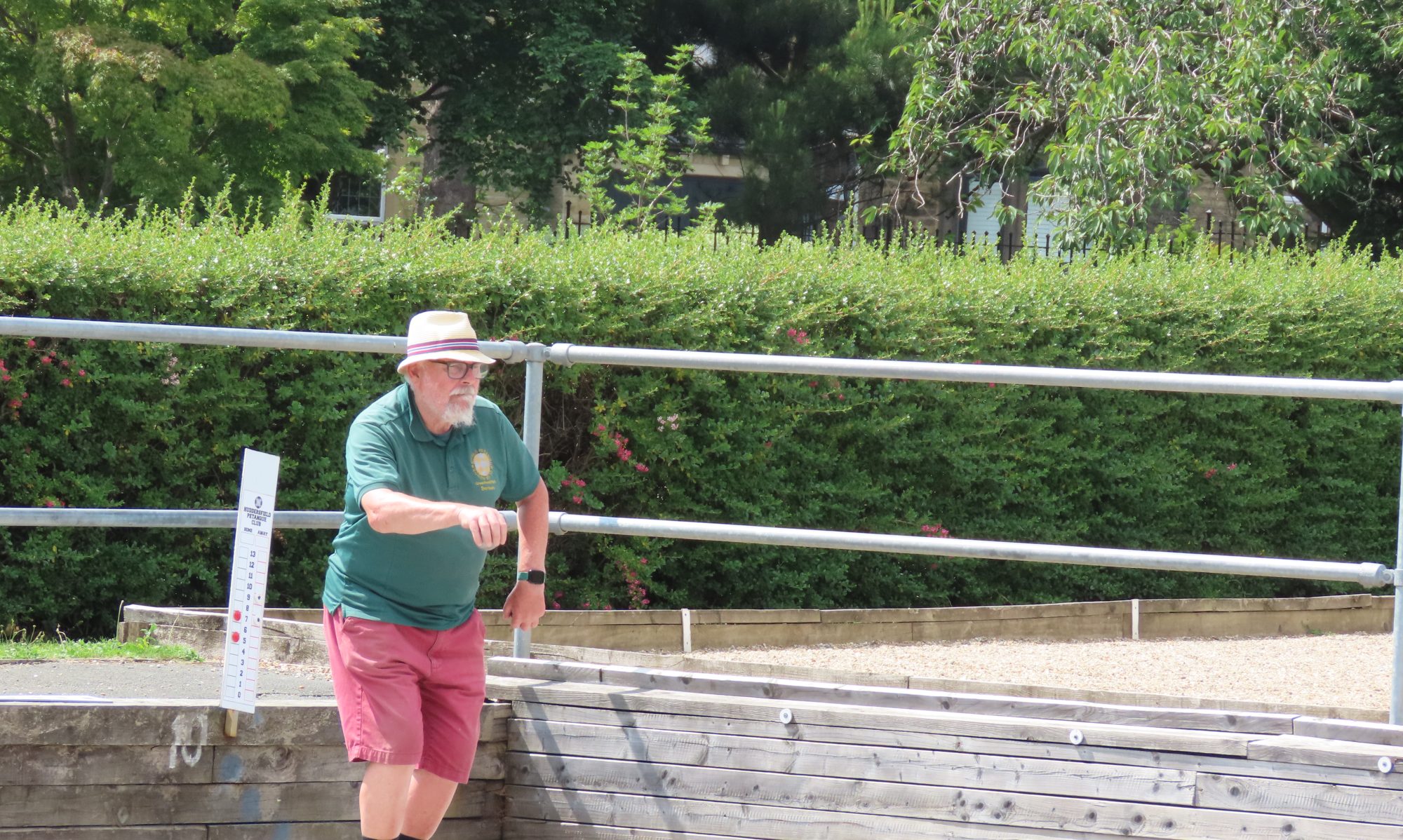
January Melee

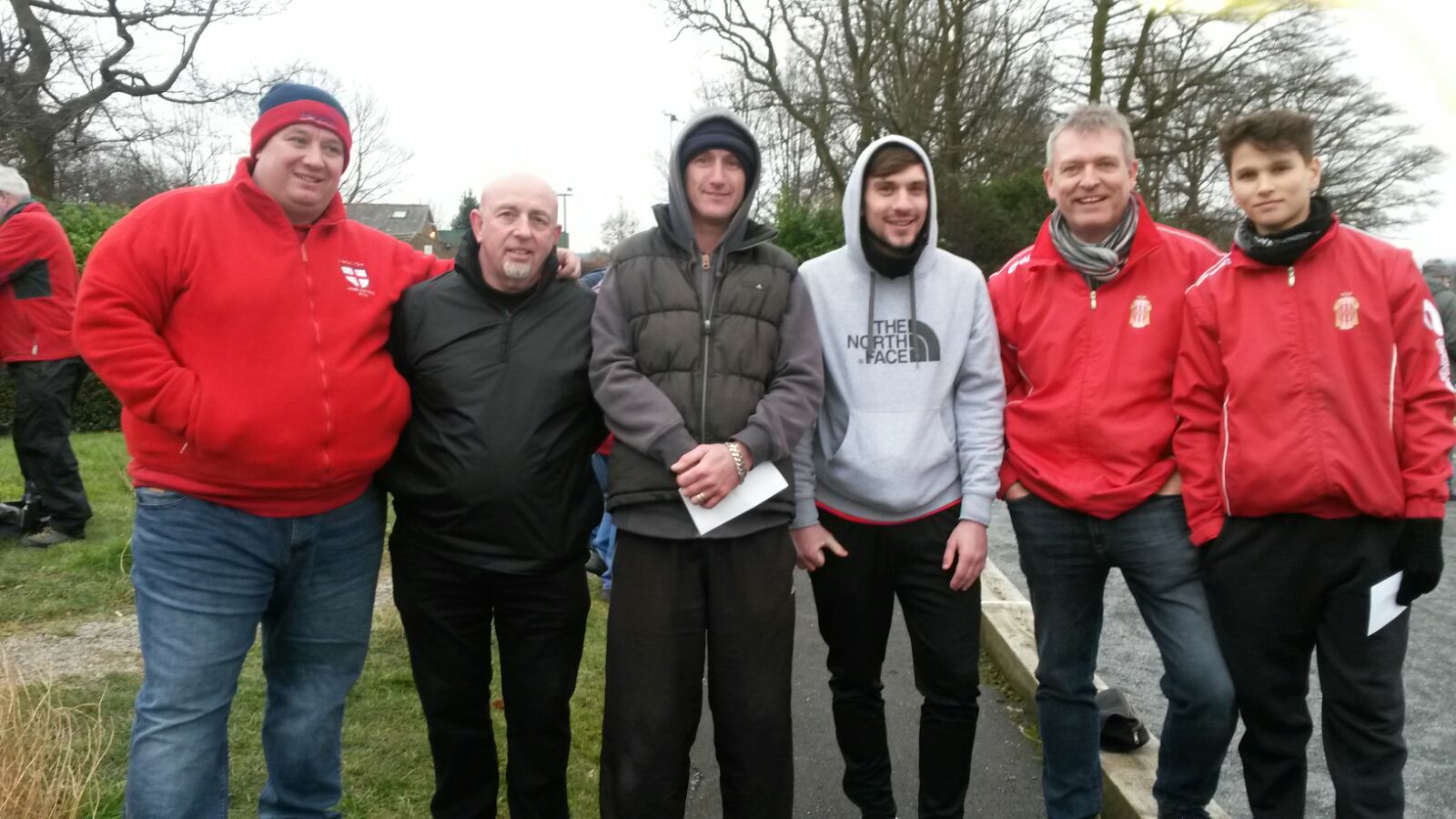
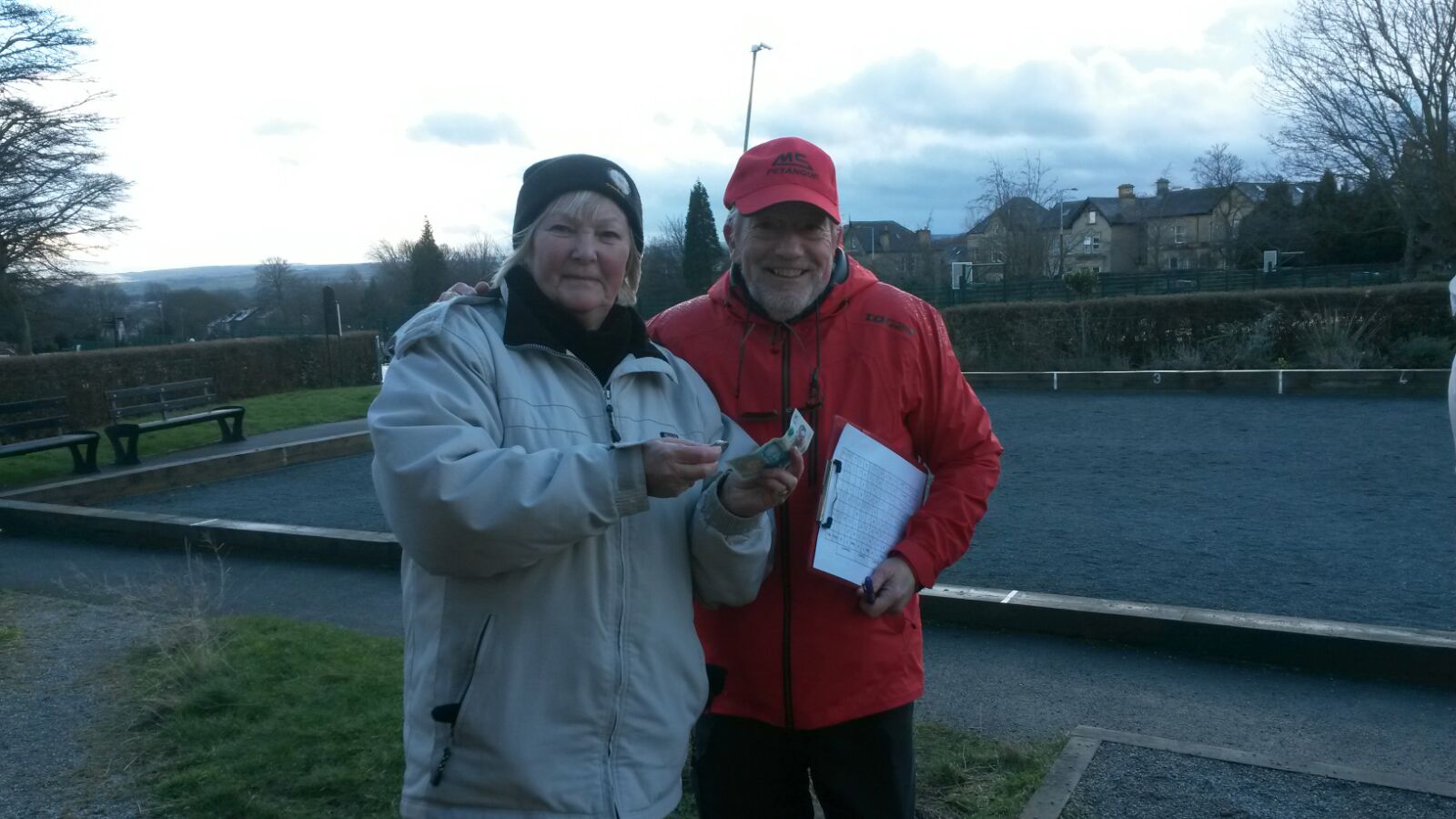
Cold, cold, cold. Everyone was glad to finish by about 3-30pm and go home to get warm. In the meantime two players won all 3 games with Richard having a +21 points difference to Rita S with +15. 3rd place was Christine K.

Richard 3 21 13.0
Rita 3 15 12.0
Christine 2 14 11.0
Sue 2 9 9.5
Robin 2 9 9.5
Amanda 2 2 8.0
Margaret 2 -4 7.0
Marie 1 2 6.0
Nigel 1 1 5.0
Michael 1 -1 4.0
Reg 1 -6 3.0
Fred 1 -7 2.0
Paul 1 -10 1.0
Pete 1 -13 0.0
Roy 1 -15 0.0
Maureen 0 -14 0.0
Elizabeth 0 -23 0.0

Overall leaderboard. Next one February 4th

name Oct Nov Dec Jan Total Adjusted
Sue 10 0.5 10 9.5 30 29.5
Rita S 13 0 12.0 25 25
Pete 12 11 0.0 23 23
Robin 5 8.5 9.5 23 23
Marie 9 5.5 6.0 20.5 20.5
Fred 0 4 13 2.0 19 19
Amanda 6 0 4 8.0 18 18
Sandra B 12 3 2 17 17
Yvonne 11 5.5 16.5 16.5
Nigel 2 8.5 5.0 15.5 15.5
Reg 12 3.0 15 15
Margaret 0.5 7 7.0 14.5 14.5
Brendan 13 13 13
Richard 13.0 13 13
Paul 2 8.5 1.0 11.5 11.5
Christine A 11 11 11
Christine K 11.0 11 11
Pauline 10 10 10
Malcolm 3 0 6 9 9
Roy 7 2 0.0 9 9
Sandra  L 0 8.5 8.5 8.5
Elaine 7.5 0 7.5 7.5
Alasdair 7.5 7.5 7.5
Sandy 0 0 5 5 5
Barrie 4 0 4 4
Michael 4.0 4 4
Maureen 0 0 2 2 2
Maggie 1 1 1
Kevin 1 1 1
Phil 1 1 1
Elizabeth 0.0 0 0


How far do you want to go this year?

Huddersfield Petanque club can help you along the way…

Petanque is a game and a sport. Most new players tend to start off by thinking it’s more of a game than a sport. They turn up and throw their boules, have a laugh and a chat and maybe a cup of tea and are grateful for the good company, the light exercise and the fresh air.

After a while and by watching other more experienced players people start to want to improve their game. Clubs offer informal coaching from experienced players during social games but now and again a regional coach is brought in for more advanced coaching. Novices turn into sound club players and develop skills such as shooting, walking up to the head to look at the position and taking time to prepare for their next throw. They are already learning there’s more to it than they first thought – there’s a lot more depth to what seemed at the outset a simple game. In fact it’s a sport and you can develop from an amateur to a non league player to an international.

But where do you want to go with your petanque adventure? Do you want to improve as a player? Do you want to play in a competition? At your own club or at another one nearby? Would you play in a league game for your club? Would you travel for an hour or more to play somewhere distant?  Would you play a game against a team with an England international in it? Would you travel to a foreign country to play?

Opportunities exist to do all these things for members of Huddersfield Petanque club. But you’ve got to want to do it. The club can’t make you. The desire to play at a higher level and at other places has to come from the individual member.

We already offer for free a monthly melee on the first Sunday. Most members know about this and it’s usually well attended and we have a winner every September and March. It’s non threatening and social players mix in with more competitive types and it’s good fun.

Now and again we offer pound melees where for a small stake someone can win a tenner (and maybe second place a fiver). These are only with fellow members and provide competition level games with only a small outlay.

Every month in the summer and some winter months we put on a pairs or triples event where you keep the same partner and it’s a £2 entry fee. We call these Open events as players from other clubs can attend but not many outsiders turn up.

We’ve started a policy of playing other clubs with as many as 18 members travelling to their terrain and playing a whole day of petanque (often with a lunch thrown in). These days are a good day out and cost nothing to the players and offer a similar mix of playing levels – some good some less good – and we hope to continue this.

Harrogate are already on the list for 2018 and probably Mansfield and Chesterfield.

In the summer many clubs offer all day melees. Turn up on the day and play 5 games starting at 1030 with a lunch intermission. The level of competition is mixed – some strong players but a good mix with probably more social players that others. HPC has achieved podium finishes at these events where there are often 50 plus players. The best one is at Stockton on the Forest near York.

But at this point you have to decide on whether you want to move further along the road or stay in your comfort zone. Playing at a higher level means that individuals have to specialise and choose whether they want to be a pointer or a shooter (or indeed a milieu) and they have to think and talk a lot more and decide which is the best action for the game on the ground. Some baulk at this quoting the “It’s only a game” mantra but some adapt to the higher level skills needed.

League matches means a step up in level. You’re not just playing members from another club -you’re playing the best players from another club and that’s a different thing. We currently play in one league with 8 fixtures of 5 games each. If you want to play at this level you should attend the team development talks we offer and start learning the rules and the techniques and strategies that win matches. At this point it’s worth getting a regular partner who complements your skills. Every shooter needs a pointer and every pointer need a shooter. Triples need someone who can do both.

One day you and your regular playing partner might decide you want to enter a weekend competition at another club in the region. There’s something every weekend in Summer in our region and every other weekend in winter. The entry fee is higher; the cash prizes are higher and the players tend to be the top players at their clubs so you’re meeting players as good as your club’s best players every game. There’s not many easy games. It’s easy to be overawed by the level of skill and grasp of tactics and commitment to the game at these events but playing against better players makes you a better player. It may take a few events before you win your first game at this level but stick with it – it’s good for you. These events do turn up at your home club a few times a year and many players have a go but you need to play at this level regularly to maintain your improvement.

This year Northern events are changing so there are gold, silver and bronze levels. Higher levels events have a higher entry fee but bigger prizes and you need to hold a northern or EPA licence. Ask a committee member if you want to know more.

If you want to play for Yorkshire (or northern region as they call it round here) you can. You have to enter the qualifiers (that’s 3 days of competition) and hope that your performance earns you a call up to the squad. If it does you get to wear a northern polo shirt provided free for players in the squad.

However there will be many who enter this process and there are only a limited number of places in the squad. At this level you need to be a full licence holding member of the English Petanque Association. It’s also worth investing in a quality waterproof, some cold weather clothing and a thermos flask.

If you do succeed in the qualifiers you may end up playing for the region anywhere in the UK and every year in September the region joins all the other regions at an end of season competition at Hayling Island where over a long weekend regions win or lose or are promoted or relegated.

The best players from the regional events are invited to play for England. There are home internationals and eventually world championships. There are quite a few England internationals in the region. They tend to wear their England shirts (and why not?) as they play around the region. They’re just ordinary people who decided to practise and improve and achieved recognition for their efforts.

Some people take a giant step and play in tournaments in France or elsewhere. There are a couple of monster events at Millau or Marseille with thousands of entries and you could end up playing against the very best in the world. At Millau in France you can enter for €5 and win a prize of €1,000.  It’s a long weekend away and will cost a few bob although I have yet to try it but the cool thing is that anyone can enter regardless of their ability and it will probably be a great weekend (the wine and cheese alone is worth the trip). Marseille 2017 had 4,152 teams, 12,456 players with 348 players from outside France. Millau is changing its format after it grew so big that it caused traffic jams in the city.

The announcement of the candidacy of Boules Sport for the 2024 Olympic Games has cast the spotlight on sports which are still not well-known. Petanque, Boule Lyonnaise, & Raffa Volo are represented in 165 countries with over 200 million players. 67 countries have won medals at a world championship. Bocci and bocce are played worldwide as well as many other variants.

Sport Boules is already present in the largest multi-sport global events: World Games, Mediterranean Games, Asian Indoor Games, S.E.A Games, All Africa Games, Pacific Games, Commonwealth Games, Islands Games (Indian Ocean), Asian Beach Games.

Fancy being an Olympian? It could be you.

So where are you? Happy to stay local and keep rolling or ready to move up a level or two? Whatever you want HPC will support you on your journey. We have players in our club who have played at higher levels. Ask them what you want to know. We’d love to help you spread your wings and move up a level. Who knows where you’ll end up?

If you don’t want to that’s also OK. Stop at the level where you are comfortable but never stop trying to improve your game. We would like all HPC members to reach the level of a sound club player able to help new players begin their petanque journey. We were all beginners once…

The journey of a thousand miles begins with a single step. – Lao Tzu. He wasn’t a petanque player but he was quite a good pointer.

Happy New Year!!

Xmas raffle

This was drawn today and there was a winner on the terrain on the day!The Christmas elves have drawn a picture of the winners with their tickets. (They’re not much good at drawing so excuse the quality). There was also a ticket drawn that belongs to someone out there. Both tickets are on green and we need the owner of ticket 299 to get in touch. There’s a basket of Xmas goodies waiting for you.

For info:

Xmas Eve will be play if it’s a nice day but there is a prize for the best Xmas themed outfit.

New Years eve the same but if it’s not dry enough to play we will use the community room to polish off Xmas leftovers and have a chat about the game and the club. Please bring leftovers of any sort and we’ll try to eat and drink them.


Code of Conduct

The English Petanque Association has a code of conduct for competitions and we at Huddersfield are happy to adopt it for competitions we run here. It’s mostly common sense but it does specify particular things you should or must not do, See it by clicking here.

Competitor’s Code of Conduct 2018

There’s also a copy on the wall in the shed. Have a look one day and aspire to playing to the standards it sets out.


The bad rules of boules

Now and again something is so bad that it’s good.  We present…..

The Bad Rules of Boules

Found on the web at a site where they sell boules (HPC comments in brackets). If they know this much about the rules how much do they know about the boules they sell…

Petanque is also known as Boule (No – Boules. one boule is the lump of metal that you throw) and Bocce (No this is another game played mostly in Italy).  Being a traditional pub game (no it’s not) without any national governing body (The English Petanque Association would argue), variations of equipment and rules abound. Where there is doubt, locally played rules should always apply.

Please note that 1 metre = 100 cm = 3.28 feet. (actually it’s 3.08)

Description

The surface of a Petanque pitch can be of any material (plutonium is not recommended) but thin gravel or sand is most appropriate. (Sand plays no part in the pitch it’s usually compacted sandstone or limestone with a light gravel topping).  The shape can be either a thin strip 25 – 30m long (no in most clubs it’s usually 12m) and 3m wide (can be wider) or it can just be a large flat area.  In the case of a thin strip, lines often define the playing areas:- a line 2m from either end beyond which a boule is out of play (No – it’s 1m for international rules but more often 50cm for local rules) and at 5m from either end behind which a player must remain while playing each boule. (No)

Each boule is made of metal and is between 7cm and 11cm in diameter (No 8cm max), weighing about 800 grams although boules up to 1.3kg are allowed (No between 650g and 800g and most people like around 700g).  In singles, each player has four boules (No – 3), in doubles, each player has three boules and for triples, each player has just two boules.  The jack or cochonnet is a small wooden ball around 1 1/2 inches in diameter. (In the UK we say coche – in France they never say cochonnet more usually le petit or le but).  Normally a tool called a baguette is used to measure the distance between boules in close situations. (We eat them round here. Tape measure are better in this instance. We don’t measure the distance between boules – we measure how far they are from the cochonnet).

Play

Boules is most commonly played in teams of three (No).  A good team of three will often consist of a “pointeur” who is best at getting the boules nearest to the cochonnet, a “tireur” who specialises in knocking opposing balls out of contention and a “milieu”, the captain (not necessarily) who is an all-rounder.  To begin with players (teams) draw lots (toss a coin) to decide who goes first.  After the first leg, the player who threw the closest boule in the previous leg (we call them ends) starts the next leg from the position of the cochonnet. (No the team chooses who throws and they have the option of moving back to throw if there isn’t enough room for a 10m throw)

The player who starts the leg must first draw a circle around her feet with a diameter of between 35 and 50 cm.  Often, the measuring baguette is used to perform this duty (It will make it difficult to eat).   All players must keep both feet on the ground and within this circle when throwing.   The player then throws the cochonnet which must land between 6 and 10 metres away and be at least half a metre away from any obstacle such as the edge of the pitch or a tree.

The nearest boule to the cochonnet is always called the “best boule” (we don’t use these words).   Each player throws boules until that player runs out of boules (no – the team chooses which member plays next) or throws a boule that is best boule.  Once a player achieves best boule, the next player on the opponents team plays in the same way.  When a player runs out of boules, the next player in the same team takes over (No).  Note that the first player therefore always throws just one boule before retiring from the throwing circle because the first boule is automatically best boule (No).  When all the players in a team run out of boules, the opposing team finishes the leg by playing all their remaining boules in an effort to increase their score.

Scoring is the same as for Lawn Bowls – the winner of the leg scores one point for each boule that is closer to the target than the opponent’s best boule.  The team that reaches 13 points first wins.

While I’m here

A set of 6 Chromed boules in an attractive, robust wooden case with carry handle. The wooden case makes a nice alternative to the more common aluminium style. This set includes 3 silver boules and 3 black boules. Great for identifying whose boule is whose!

The set also includes a jack and a measuring cord. (Measuring cords don’t measure – they’re just pieces of cord)


Real competition boules come in sets of 3. They have the manufacturer’s name, the weight in grams and a unique reference number stamped on each boule. They cost at least £60. Your set of 8 boules is 4 pairs of 2 boules which is OK for fun but not competitions.